



Coal Quality Parameters Explained for Bulk Buyers
Coal quality parameters are the most important factors for any business that buys coal in large amounts. When a company buys thousands of tons of coal, even a small mistake in understanding these details can lead to huge financial losses. If the coal quality is not right, the machines in a factory might stop working properly or the cost of production can go up very fast. This is why bulk buyers must look at every detail before they make a deal.
Many buyers work with a reliable wholesale coal supplier, but they still need to check the parameters themselves. You cannot just rely on a name or a brand. You have to look at the facts and figures in the test reports. Understanding these parameters helps a buyer know exactly what they are paying for. It also helps them avoid performance issues like low heat or too much waste.
This guide explains coal quality parameters in a very simple way. We will look at why these factors matter and how they change the way coal burns. By the time you finish reading, you will know how to evaluate coal quality just like an expert. This knowledge will help you save money and keep your industrial operations running smoothly without any trouble.
What Are Coal Quality Parameters?
Coal quality parameters are measurable factors that tell us how coal will perform when we burn it. Think of them like a health report for the fuel. These factors define the energy, the waste, and the chemical behavior of the coal. Every batch of coal is different because it comes from the earth. Therefore, measuring these factors is the only way to know the true value of the coal.
It is very important for every buyer to analyze these parameters independently. Even if a supplier provides a report, a smart buyer understands what those numbers mean for their specific machines. If you do not analyze them, you might buy coal that is too wet or has too much ash. This leads to higher costs and can even damage expensive equipment.
Physical vs Chemical Properties
Coal has two main types of properties that buyers look at. The first is Physical Properties. These are things you can see or measure physically. For example, the size of the coal pieces is a physical property. If the pieces are too small, they might fall through the grates in a furnace. Moisture is also a physical factor because it is about the water content inside the coal.
The second type is Chemical Properties. These are about what the coal is made of at a molecular level. Key chemical factors include carbon, ash, and sulfur. Carbon provides the heat, while ash is the material that does not burn. Sulfur is a chemical that can cause pollution and rust in machines. Understanding both physical and chemical properties is the only way to get a complete picture of coal quality.
Why Parameters Matter in Bulk Orders
In bulk orders, these parameters directly affect three main things:
- Energy Output: If the quality is high, you get more heat from less coal.
- Cost Efficiency: Good parameters mean you spend less money on shipping and waste removal.
- Equipment Impact: The right coal keeps your boilers and furnaces safe. The wrong coal can cause blockages or corrosion, which costs a lot of money to fix.
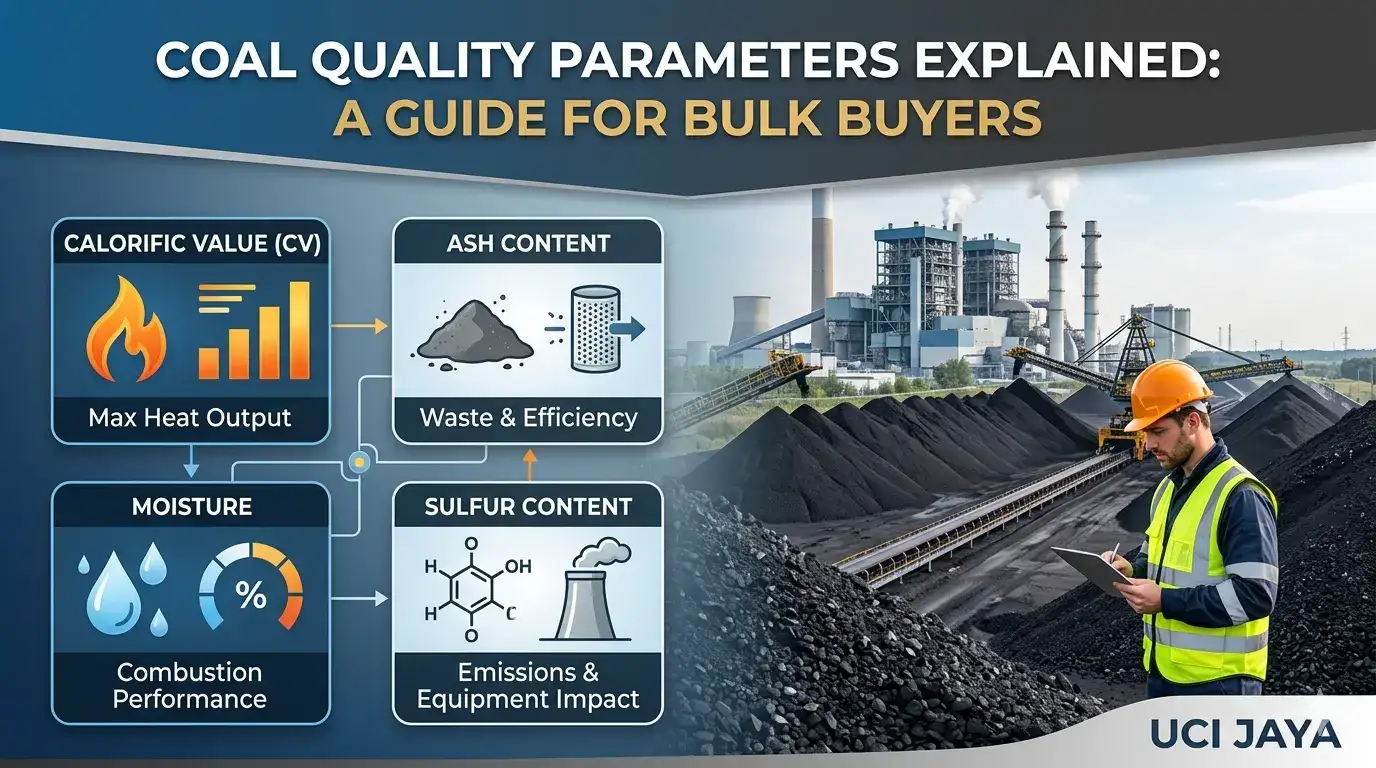
Calorific Value (CV): Measure of Energy Output
Calorific Value, often called CV, is the most important parameter for coal. It measures the amount of heat energy inside the coal. When you burn coal, the main goal is to get heat. CV tells you exactly how much heat you will get from one kilogram or one ton of that coal. For bulk buyers, this is the primary factor that decides the price of the coal.
What Calorific Value Indicates
Calorific Value indicates the strength of the fuel. If the CV is high, it means the coal is very powerful. If the CV is low, the coal is weak and you will need to burn a lot more of it to get the same results. In technical reports, you might see terms like GCV (Gross Calorific Value) or NCV (Net Calorific Value). Buyers look at these numbers to understand the real energy potential of their purchase.
High vs Low CV Impact
The impact of CV on your business is very clear. High CV coal is more efficient. You need a smaller amount of coal to run your factory, which means you save money on storage and transport. On the other hand, Low CV coal means high consumption. You have to buy more coal, move more coal, and feed more coal into your machines. This often increases the workload for your staff and puts more stress on your equipment.
How Buyers Compare CV Across Suppliers
Buyers use a practical benchmarking approach to compare CV. They do not just look at the price per ton. Instead, they calculate the price per unit of energy. This helps them see which supplier is actually giving them a better deal. In this context, buyers often evaluate the performance of a consistent steam coal supplier by checking if the CV stays the same across different shipments. If the CV changes too much, it can ruin the settings of the industrial boilers.
Ash Content: Impact on Efficiency and Waste
Ash is the material that remains after coal is completely burned. It is the non-combustible part of the coal, meaning it does not give any heat. In fact, ash is a problem for buyers because it takes up space but provides zero energy. High ash content is usually a sign of lower quality coal.
How High Ash Affects Operations
High ash content creates several problems for industrial operations. First, it creates more waste. If you burn 100 tons of coal and it has 20% ash, you are left with 20 tons of waste that you must clean and throw away. This adds to your labor costs. Second, ash can cause equipment blockage. When ash gets hot, it can melt and stick to the inside of the boiler. This is called slagging, and it can stop your machines from working.
Low Ash Coal Benefits
Using low ash coal has many benefits. It leads to better combustion because there is more room for the fire to burn. It also means less maintenance. Your machines stay cleaner for a longer time, and you do not have to stop production to remove waste frequently. Most high-end industries prefer low ash coal to keep their operations efficient.
Acceptable Ash Ranges by Industry
Different industries have different standards for ash. For example:
- Power Plants: Can often handle 15% to 30% ash because they have big systems to manage waste.
- Cement Plants: Might accept higher ash because ash can sometimes be mixed into the cement.
- Paper or Textile Mills: Usually need lower ash to keep their smaller boilers safe.
In these cases, the quality supplied by an experienced industrial coal supplier is compared to see if it meets the specific needs of the factory.
Moisture Content: Hidden Performance Factor
Moisture is simply the water present in the coal. It might not seem like a big deal, but moisture is a "hidden" factor that can ruin coal performance. Water does not burn. When you put wet coal into a furnace, the fire has to use some of its energy just to dry the coal before it can start burning it.
Types of Moisture in Coal
There are two main types of moisture you will see in a report:
- Surface Moisture: This is water on the outside of the coal pieces. It usually comes from rain or the washing process at the mine.
- Inherent Moisture: This is water trapped inside the structure of the coal itself. Even if the coal looks dry on the outside, it can have inherent moisture inside.
How Moisture Reduces Efficiency
Moisture reduces efficiency in a very simple way: Energy loss during evaporation. The heat that should be used for your industrial process is wasted on turning water into steam. Also, if coal has too much moisture, it becomes heavy. This means you are paying for the weight of water instead of the weight of fuel. High moisture also makes coal sticky, which makes it hard to move through pipes and conveyors.
Ideal Moisture Levels for Bulk Buyers
Bulk buyers look for coal with manageable moisture levels. If the moisture is too high, the coal can even catch fire by itself during storage in a process called spontaneous combustion. Ideally, buyers want low moisture to ensure easy handling and high energy output.
Volatile Matter: Combustion Behavior Indicator
Volatile matter refers to the gases and liquids that come out of the coal when it is heated. It is a very important indicator of how the coal will catch fire and how the flame will look.
High vs Low Volatile Matter
- High Volatile Matter: This coal ignites very quickly. It is good for processes where you need to start the fire fast. However, it can also be dangerous if not handled carefully.
- Low Volatile Matter: This coal is harder to start, but it burns in a very controlled way. It provides a steady heat for a long time.
Role in Industrial Applications
Different industries need different burning behaviors. For example, power plants often like a certain amount of volatile matter to keep the fire stable. If the volatile matter is too low, the fire might go out. If it is too high, it might burn too fast and waste fuel.
To optimize performance, buyers must balance volatile matter with other factors like carbon and ash. During this evaluation, buyers often analyze the specification sheet provided by a reliable thermal coal supplier to make sure the coal fits their specific furnace design.
Fixed Carbon: Core Energy Component
Fixed carbon is the solid fuel that stays in the furnace after the volatile gases are gone. It is the core energy component of the coal. While volatile matter gives you the quick flame, fixed carbon gives you the long-lasting heat.
What Fixed Carbon Represents
Fixed carbon represents the actual fuel value of the coal. It is the part that burns slowly and provides a steady temperature. In a proximate analysis report, high fixed carbon is always a good sign for industrial users who need a lot of energy.
Relation with Calorific Value
There is a very strong relation between fixed carbon and Calorific Value. Generally, higher fixed carbon means higher energy. If a coal sample has a lot of fixed carbon, it will almost always have a high CV. This is the material that does the heavy work in your boilers.
Importance in Long Burning Processes
For industrial processes that run for 24 hours, fixed carbon is critical. It ensures that the heat stays at a constant level. Industries like steel and metal smelting rely heavily on high fixed carbon coal to maintain the high temperatures needed to melt metal.
Sulfur Content: Environmental and Equipment Impact
Sulfur is a chemical element found in coal that can cause a lot of trouble. When coal burns, the sulfur turns into sulfur dioxide gas. This gas is bad for the environment and bad for your machines.
How Sulfur Affects Emissions
Sulfur is the main cause of air pollution from coal. Many countries have strict environmental regulations. If your coal has too much sulfur, you might get fined by the government. High sulfur coal requires expensive "scrubbers" or filters to clean the smoke before it leaves the chimney.
Impact on Equipment Life
Sulfur also causes corrosion issues. When sulfur gases mix with moisture, they create acid. This acid eats away at the metal parts of your boilers, pipes, and chimneys. Over time, high sulfur coal will destroy your equipment and lead to very expensive repair bills.
Acceptable Sulfur Limits
Most buyers look for "Low Sulfur Coal," which usually means sulfur below 1%. In high-quality sourcing, the offerings from a premium coal supplier are almost always low in sulfur to protect both the environment and the machinery.
Coal Size and Granularity
The physical size of coal is just as important as its chemistry. Coal comes in many sizes, from large rocks to fine powder.
Standard Coal Sizes
Common sizes in the market include:
- Lump: Large pieces, usually used in specific industrial grates.
- Nut: Medium-sized pieces.
- Fines: Very small pieces or dust.
Impact on Combustion Efficiency
If the coal size is uniform, the air can flow through it easily, which leads to uniform burning. If the sizes are mixed (some big and some small), the fire will be uneven. The small pieces will burn too fast, and the big pieces will take too long. This wastes fuel and makes it hard to control the temperature.
Handling and Storage Considerations
Size also matters for transportation. Very small coal (fines) can blow away in the wind or get washed away by rain, leading to losses. An experienced bulk coal supplier makes sure that the coal size is correct and that it stays that way during shipping.
Coal Origin and Its Effect on Quality
Where the coal comes from tells you a lot about its quality. Different parts of the world have different types of coal mines.
Differences Between Major Coal Origins
Indonesian coal is very famous for being low in ash and sulfur, which makes it very popular for power plants. Coal from other countries might have more energy but also more sulfur. Each origin has its own "DNA."
Consistency Based on Source
The quality of coal can change even between two different mines in the same country. Smart buyers look for consistency. They want to know that the coal they buy today will be the same as the coal they buy next month. This is why origin transparency is so important. In this context, buyers frequently compare specifications from a verified Indonesian coal supplier to ensure they get a predictable quality every time.
How to Read a Coal Test Report
To buy coal successfully, you must know how to read a test report. There are two main types of analysis:
Proximate Analysis Breakdown
This is the most common report for buyers. it tells you four main things:
- Moisture: How much water is inside.
- Ash: How much waste will be left.
- Volatile Matter: How easily it will catch fire.
- Fixed Carbon: How much solid fuel is there.
Ultimate Analysis Overview
This is a more detailed chemical report. It breaks the coal down into its basic elements: Carbon, Hydrogen, Sulfur, and Nitrogen. This is usually needed for very specific industrial calculations or environmental reports.
How to Compare Reports
When you have reports from multiple suppliers, put them side-by-side. Do not just look at the price. Check which coal gives you the best balance of energy (CV) and low waste (Ash/Sulfur). This side-by-side evaluation is the best way to make a smart decision.
How to Prioritize Parameters Based on Your Industry
Every business has different needs. You should prioritize parameters based on your specific industry.
|
Industry |
Primary Focus |
Secondary Focus |
|
Power Plants |
Calorific Value |
Moisture & Volatile Matter |
|
Cement Industry |
Ash Content |
Consistency |
|
Steel Industry |
Fixed Carbon |
Sulfur Control |
Power plants want the most heat for the lowest price. Cement plants can handle some ash, but they need the quality to be the same every day. Steel makers need the purest carbon possible to make high-quality metal.
Common Mistakes Buyers Make
Even experienced buyers sometimes make mistakes. Here are the most common ones:
- Focusing Only on Calorific Value: High CV is great, but if the ash is also very high, you will lose all your savings on maintenance and waste cleaning.
- Ignoring Moisture and Ash Balance: You must look at how these factors work together. High moisture plus high ash is a recipe for a disaster.
- Not Verifying Lab Reports: Always make sure the lab report is from a trusted, independent third party. Relying on an unverified report is very risky and can lead to buying bad coal.
Summary of Coal Quality Factors
Understanding coal quality parameters is the foundation of successful bulk buying. Each factor, from Calorific Value to Sulfur content, plays a specific role in how the coal burns and how much it costs you in the long run. When you know how to read a test report and how to prioritize the right parameters for your industry, you can control your costs and improve the efficiency of your factory.
Buying coal is not just about finding the lowest price per ton. It is about finding the best value for your money. Educated evaluation helps you avoid hidden losses and protects your expensive machinery. By paying attention to these details, you ensure that your business stays productive and profitable.
Sourcing High-Quality Coal for Your Business
If you are looking for reliable coal for your industrial needs, it is important to work with a partner who understands these parameters. A good supplier will provide you with clear and honest test reports for every shipment. They will help you understand the CV, ash, and moisture levels so you can be sure the coal fits your machines perfectly.
When you buy from a trusted coal export company name like UCI JAYA, you get coal that meets international standards. Whether you need coal for a power plant, a cement factory, or a textile mill, we provide the right specifications to keep your business running. Our focus is on providing consistent quality that helps you save money and reduce waste. Contact us today to discuss your bulk coal requirements and get a detailed quote based on your specific quality needs.
Featured Articles
Industrial plants and large power stations need steady energy to run their mach
READ FULLMost people think that coal is just one single thing that we dig out of the gro
READ FULLBulk procurement is a very serious task for any business. When you decide to bu
READ FULL