



How to Check Steam Coal Quality Before Bulk Sourcing
Industrial plants and large power stations need steady energy to run their machinery every day. Buying fuel in massive quantities involves serious financial decisions, so checking the physical and chemical properties of the material before it leaves the port is highly critical. If a buyer receives a bad batch with poor burning properties, it can damage expensive boilers and cause unexpected power shutdowns. Following a strict testing plan helps companies verify that their raw material matches their contract agreements perfectly.
This detailed guide explains the exact laboratory tests and inspection steps needed to check fuel shipments before making a final payment. This process protects businesses from low-quality materials and keeps operations running smoothly. Working closely with a reliable steam coal supplier ensures that every delivery meets the exact heat standards required for heavy machinery.
1. Proximate Analysis of Steam Coal
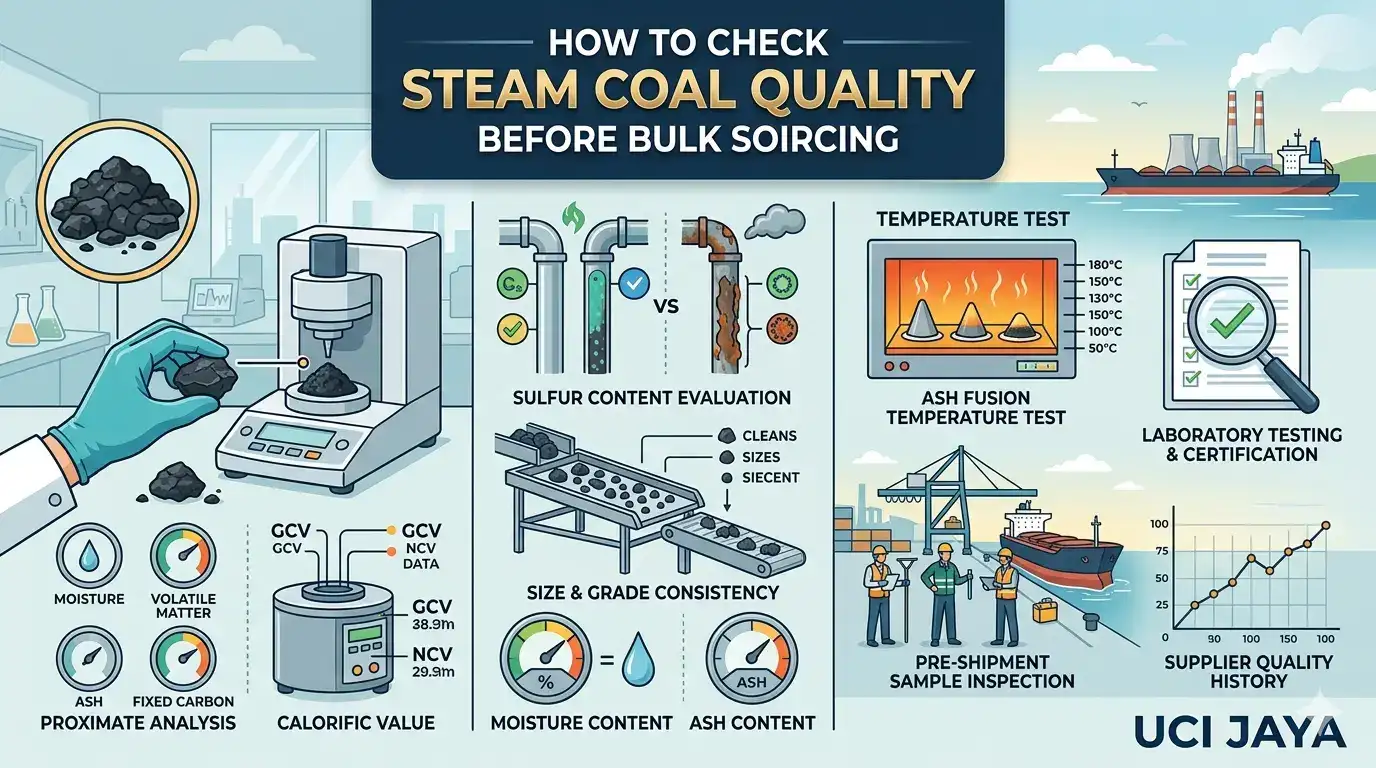
Proximate analysis is the most basic laboratory test used to understand the chemical makeup of solid fuel. This test breaks down the material into four main parts by weight percentage. These parts are moisture, volatile matter, ash, and fixed carbon. Technicians use specialized heating ovens to check how the material reacts to different high temperatures.
Each of these parts changes how the fuel burns inside a large furnace:
- Moisture: This is the water trapped inside the material which must dry out before the fuel can catch fire.
- Volatile Matter: These are natural gases released when the fuel gets hot. High gas levels help the fuel ignite quickly and stay lit.
- Ash: This is the leftover dirt and mineral waste that cannot burn.
- Fixed Carbon: This is the solid combustible material that gives the furnace long, steady heat.
This test helps engineers balance the ratio of burnable material against worthless waste matter. Knowing these percentages lets factory workers adjust their boiler controls to get the best performance from the batch.
2. Calorific Value Testing
Calorific value testing calculates the exact amount of heat energy the fuel releases during complete combustion. This number is the most important factor for setting the price of the commodity. Workers measure this energy using a precise laboratory tool called an oxygen bomb calorimeter. A tiny sample is burned inside a strong steel container filled with oxygen, and sensors track how much the surrounding water heats up.
Industrial purchase contracts usually look at two different heat values:
|
Energy Metric |
Plain Definition |
Practical Effect |
|
Gross Calorific Value (GCV) |
The total heat released including all water vapor created during burning. |
Used for setting trade prices and international contracts. |
|
Net Calorific Value (NCV) |
The actual usable heat after subtracting the energy lost to dry out fuel water. |
Shows the real power output a factory will get in daily operations. |
A large gap between these two numbers means the buyer is paying for water weight instead of real heating power. Accurate calorimeter tests stop businesses from wasting money on poor fuel.
3. Sulfur Content Evaluation
Sulfur content evaluation is necessary to protect the environment and keep factory machinery safe from chemical damage. Sulfur is a natural element found in mineral mines, but it turns into harmful sulfur dioxide gas when burned. This gas creates heavy air pollution and destroys steel parts inside industrial facilities.
High sulfur levels cause two main mechanical problems inside a boiler system:
- High-Heat Corrosion: Sulfur gases mix with hot air to attack and thin out the metal superheater tubes.
- Cold-End Acid Damage: As the smoke cools down near the back of the system, sulfur combines with water to form strong acid that eats away the steel ducts.
Laboratories use infrared sensors to find the exact sulfur percentage in a sample. Keeping sulfur levels low avoids environmental fines and saves money on early machine repairs.
4. Size and Grade Consistency Check
The physical size of the fuel pieces has a huge effect on how machines move and burn the material. Size and grade consistency checks make sure the pieces fit the conveyor belts and crushing mills of the factory. Testing stations use mechanical shaking screens with different hole sizes to separate a sample into categories, from large chunks down to fine dust.
Industrial buyers can avoid many handling problems by purchasing their stock from an experienced thermal coal supplier that screens material properly.
Bad sizing creates major operational trouble throughout the plant. Too much fine dust plugs up transport pipes, creates dangerous breathing conditions, and can start accidental fires in storage yards. On the other side, giant lumps jam up the grinding mills and do not burn completely, leaving wasted carbon in the ash pit. Checking for uniform size keeps the fuel moving without stoppages.
5. Moisture Content Assessment
Moisture content assessment measures the total weight of water carried inside a bulk cargo shipment. This moisture comes in two forms, which are surface water from rain and internal water trapped inside the tiny pores of the rocks. Technicians weigh the samples before and after baking them in testing ovens to find the exact water loss.
High water percentages hurt businesses financially and mechanically:
- Wasted Shipping Money: Paying for freight space to transport water instead of real fuel lowers profits.
- Sticky Moving Parts: Wet dust turns into mud, which glues up discharge chutes and clogs storage bins.
- Lost Heat Efficiency: The furnace has to use its own energy to dry the wet rocks before they can burn, which drops the fire temperature.
Regular water testing helps procurement teams adjust their final bills so they only pay for dry fuel weight.
6. Ash Content Inspection
Ash content inspection shows the total amount of non-burning mineral dirt left behind after the fuel is completely spent. This waste material comes from clay and sand mixed into the fuel bed during mining. Workers find this percentage by burning a sample at extremely high temperatures until all organic carbon disappears.
High ash levels lower the efficiency of the entire factory. Every pound of ash replaces a pound of useful carbon, which thins out the energy value of the load. Large amounts of ash also force the plant to run heavy disposal conveyors and cleaning filters constantly, which uses up extra electricity. Regular inspection keeps buyers from purchasing useless rock waste.
7. Ash Fusion Temperature Test
The chemical mix of the leftover ash determines how it behaves under the extreme heat of a working furnace. The ash fusion temperature test tracks the shape changes of a small ash cone inside a high-heat oven. Technicians watch the test sample to write down four separate melting steps:
- Deformation Temperature: The first stage where the sharp tip of the ash cone starts to round off.
- Softening Temperature: The critical point where the sample melts into a sticky, paste-like shape.
- Hemispherical Temperature: The phase where the melting sample forms a flat dome.
- Fluid Temperature: The final step where the material turns completely liquid and runs flat.
If the softening point is too low, the melted ash will stick to the hot boiler tubes, cooling into a hard, glass-like crust called slag. This crust stops heat from passing through the metal and forces workers to shut down the machines for cleaning. Knowing these stages helps engineers keep their fires at safe temperatures.
8. Laboratory Testing and Certification Review
Checking official laboratory documents is a vital step before accepting a large bulk delivery. Buyers must trust independent testing companies that hold official ISO certificates. These neutral groups follow international testing rulebooks to make sure their data is correct and honest.
A real quality certificate must display clear sample numbers, total batch weight, the sampling location, and the test dates. Buyers need to look closely at whether the numbers are calculated on an As-Received or Dry Basis. Comparing these official documents against the original purchase contract allows companies to reject bad cargo before it enters their storage yards.
9. Pre-Shipment Sample Inspection
A pre-shipment sample inspection gives the buyer a final look at the product quality at the loading port before the cargo ship leaves. This step stops suppliers from mixing cheap, low-grade material into the bottom of the ship holds. Independent inspectors take small physical portions from the moving conveyor belts while the ship is being loaded.
This port inspection focuses on three main targets:
- Fair Sampling: Taking small amounts throughout the entire loading day so the final mixed sample represents the whole ship.
- Visual Pollution Check: Looking for large rocks, wood trash, metal pieces, or pools of water in the pile.
- Quick Field Tests: Running fast checks for moisture and heat values to catch bad drops in quality before the ship departs.
Getting an honest sample at the shipping port ensures the laboratory results match the actual product being bought.
10. Supplier Quality History Verification
Looking at the past performance history of a mining company is an excellent way to reduce business risks over long periods. Professional producers maintain great control over their mines and cleaning facilities, which means their product stays the same from month to month. Buyers should ask for quality reports from older clients to check for steady habits.
Important areas to check when studying a supplier include:
- Quality Change Tracking: Checking if the heat and ash numbers stayed steady or jumped around wildly across past deliveries.
- Asset Ownership: Finding out if the supplier owns their processing plants or buys randomly from third-party yards.
- Market Trust Reviews: Asking other large factories if the supplier fixes quality mistakes quickly and follows contract promises.
Working with an open, experienced producer reduces the chance of getting bad material, keeping your factory running without interruptions.
Summary of Bulk Quality Verification
Checking bulk fuel quality requires a clear plan that combines careful laboratory testing with strict port inspections. From measuring simple chemical parts in a proximate analysis to watching how ash melts under intense furnace fires, every test protects industrial machines and corporate capital. Using certified laboratories and taking fresh samples from loading ports allows procurement teams to make choices based on clear facts. This complete testing chain removes risky guesswork, cuts down on expensive machine repairs, and ensures steady heating performance for every factory operation.
Secure Your Energy Supply
Maintaining a steady, high-performance fuel stream requires a dependable supply chain partner that values honest quality control as much as your engineering crew does. Large industrial factories cannot afford to risk sudden machine breakdowns, heavy slag build-up, or major financial losses from bad material shipments. Our advanced processing assets, cleaning plants, and strict measurement steps ensure that every bulk delivery matches your exact boiler specifications perfectly.
When your business needs a supply partner that offers clear transparency along with uniform sizing, fair international prices, and certified chemical data, we are ready to help. Talk to UCI JAYA today to share your bulk volume needs, view official chemical test certificates, or set up a long-term purchase agreement with a trusted wholesale coal supplier focused on your operational growth.
Featured Articles
Industrial plants and large power stations need steady energy to run their mach
READ FULLMost people think that coal is just one single thing that we dig out of the gro
READ FULLBulk procurement is a very serious task for any business. When you decide to bu
READ FULL