



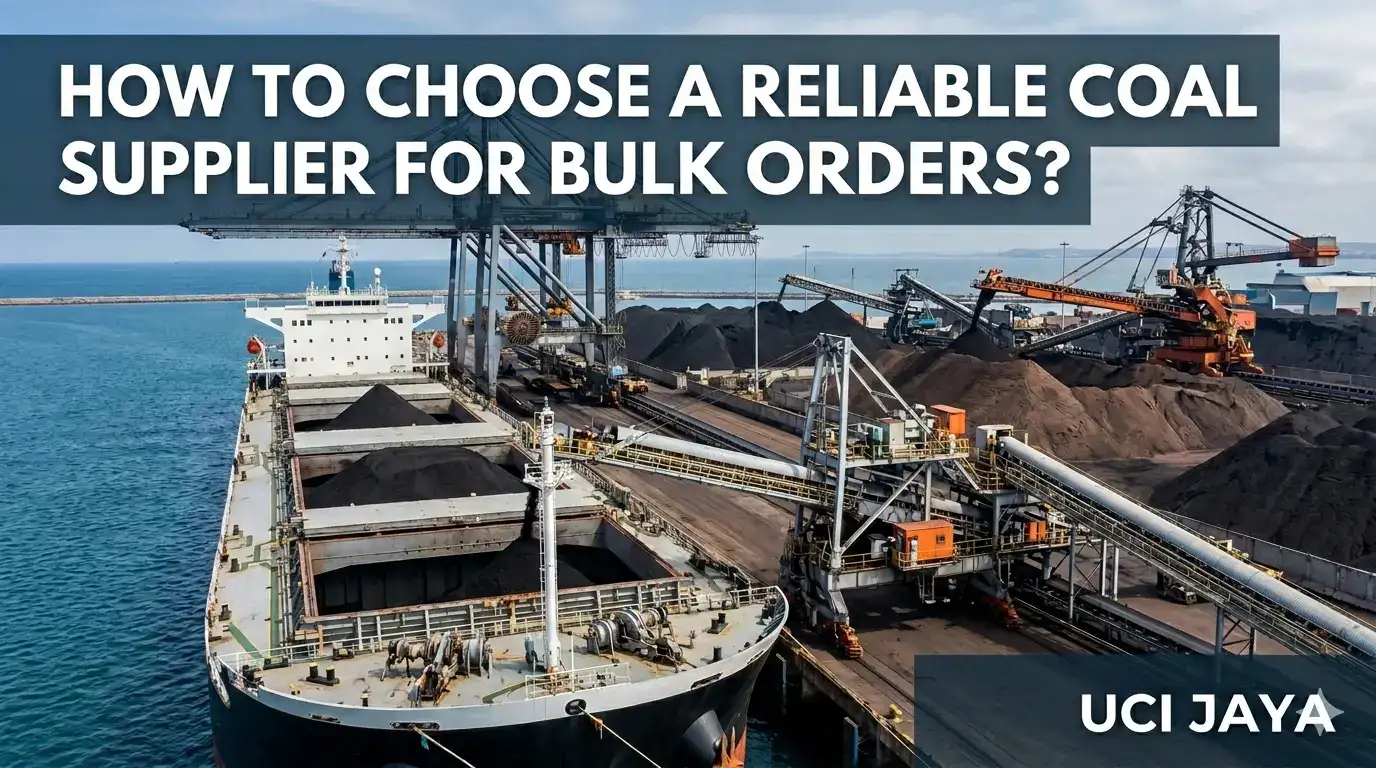
How to Choose a Reliable Coal Supplier for Bulk Orders?
Bulk procurement is a very serious task for any business. When you decide to buy coal in large amounts, the choice of your supplier determines your success. A wrong choice can lead to big financial losses and stop your entire production. This is why choosing a partner is a critical decision in the supply chain. In this guide, we provide only practical steps and methods to help you find the right fit. Many successful businesses follow a structured approach when they evaluate an experienced bulk coal supplier. This method helps them avoid risks and keep their operations running without any breaks.
Choosing a supplier is not just about finding a low price. It is about finding someone who understands your technical needs and can deliver on time. If the coal quality is poor, your machines might get damaged. If the delivery is late, your workers will sit idle. Therefore, you must look at every detail of the supplier's business before you sign any contract. This article explains the complete process from defining your needs to signing a long-term agreement.
Step 1: Define Exact Coal Specifications Before Searching
You must be very clear about your requirements before you start your search. If you do not know what you need, any supplier can give you the wrong product. Clear specifications act as a filter to remove low-quality options from your list.
Identify Required Calorific Value Range
The most important part of coal is its energy content. You must define your minimum energy requirement. This is usually measured as Calorific Value. If you buy coal with low energy, it will not heat your boilers properly. You should ask your technical team about the exact range your machines can handle. Knowing this range helps you talk to suppliers with confidence.
Set Acceptable Ash and Moisture Limits
High ash content means more waste after the coal burns. High moisture means the coal is heavy with water and will not burn easily. You must fix maximum thresholds for these two things. If a supplier provides coal with more ash than your limit, it will increase your cleaning costs. Setting these limits early makes the comparison process much easier.
Match Coal Type to Application
Different industries use different types of coal. For example, cement factories and power plants have different needs. You must select the coal type based on your specific use-case. If you are running a power station, you will likely need a reliable steam coal supplier. They specialize in providing coal that creates high-pressure steam for turbines. Choosing a specialized partner ensures that the product fits your machinery perfectly.
Step 2: Shortlist Suppliers Based on Industry Relevance
Every supplier is not suitable for every industry. Some might be good at small local deliveries but fail at bulk industrial orders. You need to find someone who knows your specific sector well.
- Filter Suppliers by Industry Experience: Only look for suppliers who have worked in your sector before. If they understand your industry, they will know the common problems you face.
- Check Existing Client Types: Ask the supplier about their current customers. If they supply coal to businesses similar to yours, it is a good sign. It shows they can handle the volume and quality your industry demands.
- Prioritize Specialized Suppliers: A general trader might not have deep knowledge. It is better to work with a professional industrial coal supplier. They have the tools and staff to manage large-scale industrial needs and can give you expert advice.
Step 3: Verify Product Quality Through Documents and Testing
You cannot trust words alone when it comes to quality. You must verify every claim with hard evidence. Testing is the only way to be sure that you are getting what you pay for.
First, you should request the latest lab test reports from the supplier. These reports must show the calorific value, ash, and moisture levels clearly. However, do not stop there. You should also cross-check these results with a third-party inspection. Independent companies can visit the site and test the coal for you. This prevents the supplier from showing you fake or old reports. Finally, compare multiple sample results from different batches. Consistency is key in bulk orders. If one batch is good and the next is bad, your production will suffer.
Step 4: Evaluate Supply Capacity Against Your Volume Needs
A supplier might have great coal, but they must also have enough of it. You need to be sure they can meet your monthly tonnage without any delays.
|
Capacity Factor |
Importance |
|
Monthly Supply Capability |
The supplier must prove they can deliver the required tonnage every month. |
|
Scalability |
If your business grows, your supplier should be able to increase the supply. |
|
Commitment Level |
They should not be so busy with other clients that they ignore your order. |
You should always check if they are a true wholesale coal supplier. Such companies have large stockpiles and strong mining links. They can handle sudden increases in demand without failing. Avoid suppliers who seem overcommitted to too many clients at once.
Step 5: Check Source Origin and Transparency
Knowing where the coal comes from is vital for risk management. If the source is not clear, you might face legal or quality issues later. Transparency shows that the supplier is honest and professional.
You should ask for specific coal origin details. This includes the country and the name of the mine. Different mines produce different qualities of coal even in the same country. You also need to verify all import and export documentation. This ensures that the coal is moved legally across borders. For many international buyers, finding a trusted Indonesian coal supplier is a common choice because of their high-quality reserves. You must be able to trace each shipment back to its source to ensure safety and quality.
Step 6: Compare Pricing Structure, Not Just Price
A low price on paper can become expensive if there are hidden costs. You must look at the complete pricing structure to understand the real cost of the coal.
Break down the pricing into FOB and CIF categories. FOB means you pay for the coal at the loading port. CIF means the supplier covers insurance and freight costs until it reaches your port. You must understand which costs are included so you can compare two suppliers fairly. Also, look for hidden charges like handling, storage, or port fees. These small costs can add up to a big amount. A professional thermal coal supplier will give you a clear breakdown. This helps you evaluate the cost-to-performance ratio. Sometimes, paying a little more for better coal saves you money because it produces more energy.
Step 7: Assess Logistics and Delivery Reliability
A failure in delivery is a failure in your operations. If the coal does not arrive on time, your factory stops. You must evaluate how the supplier handles transportation.
Check their history of delivery timelines. Ask their old clients if they ever faced delays. You should also review their transportation methods. Do they use ships, trains, or trucks? Each method has different risks. A good supplier always has a backup logistics plan. If a port is closed or a ship is delayed, they should have another way to get the coal to you. Reliability in logistics is just as important as the quality of the coal itself.
Step 8: Verify Certifications and Compliance
Ignoring compliance is very risky for your business reputation and legal standing. You must ensure the supplier follows all international and local rules.
Start by checking their quality certifications. These documents prove they meet global standards for coal mining and trading. You also need to review their environmental compliance. Governments are very strict about coal usage today. Your supplier must follow regulations to protect the environment. Also, confirm their safety standards for workers and handling. Working with a premium coal supplier gives you peace of mind. They invest in these certifications to show they are a responsible and high-quality partner.
Step 9: Test Supplier Through Sample or Trial Order
Before you sign a contract for a year, you should test the supplier with a small order. Practical testing is the final step in the verification process.
Request a small batch of samples for lab testing. Once the lab results are good, run a performance test in your actual factory conditions. Watch how the coal burns and measure the energy output. Does it meet your expectations? If the actual results match what the supplier promised, you can trust them. This trial order helps you see how they handle shipping and communication on a small scale before you commit to a bulk purchase.
Step 10: Evaluate Communication and Support System
Weak communication leads to big problems in the future. You need a supplier who talks to you clearly and quickly.
Measure their response time during your initial talks. If they take three days to answer a simple email now, they will be slower during a crisis. You should also check if you will have a dedicated account manager. Having one person to talk to makes things much easier. Review their process for resolving issues. If there is a dispute about quality or weight, how do they handle it? A professional company always has a clear system to fix mistakes and support their clients.
Step 11: Negotiate Terms and Build Long-Term Agreement
Negotiation is the final part of the selection process. This is where you protect your business interests with a strong contract.
Clarify all contract terms very carefully. You must define delivery dates, quality standards, and penalties for any failures. If the coal is bad, the supplier should pay a penalty. You should also try to secure volume-based pricing benefits. Since you are buying in bulk, you deserve a discount. Establishing a long-term supply agreement brings stability to your business. It means you do not have to look for a new supplier every month. This stability allows you to focus on growing your business while the supplier takes care of the fuel.
Step 12: Final Supplier Evaluation Checklist
Before you make the final decision, use this checklist to be 100% sure.
- Specifications Match: Does the coal meet your technical needs exactly?
- Quality Tested: Have you verified the quality through a trial order and lab tests?
- Capacity Verified: Can they supply the total volume you need every month?
- Pricing Transparent: Are there zero hidden costs in the final agreement?
- Compliance Clear: Are all legal and environmental documents in order?
Conclusion
Following a structured process is the best way to minimize risks in coal procurement. Selecting the right supplier is about balancing quality, capacity, and cost. If you skip any step, you might end up with a partner who fails you when you need them most. A reliable supplier selection leads to a consistent supply and controlled costs for your factory. This guide provides the practical methods used by experts to build strong supply chains. By evaluating every detail carefully, you protect your production and your profits. Remember that a long-term partnership with a trusted supplier is a huge asset for any industrial business.
Partner with a Reliable Name in Coal Supply
When you need a partner who understands the importance of bulk orders, you need a name you can trust. A good supplier handles the hard work so you can focus on your production. They provide the right quality at the right time without any hidden surprises.
UCI JAYA is dedicated to helping businesses find the perfect fuel solutions for their industrial needs. We understand that your success depends on a steady and high-quality supply of coal. Our team works hard to meet all international standards and provide transparent pricing for every client. If you are looking for a partner who values long-term relationships and reliable delivery, we are here to help you grow. Contact us today to discuss your requirements and let us build a supply plan that works for your business.
Featured Articles
Industrial plants and large power stations need steady energy to run their mach
READ FULLMost people think that coal is just one single thing that we dig out of the gro
READ FULLBulk procurement is a very serious task for any business. When you decide to bu
READ FULL