



What is Steam Coal? How Steam Coal is Produced?
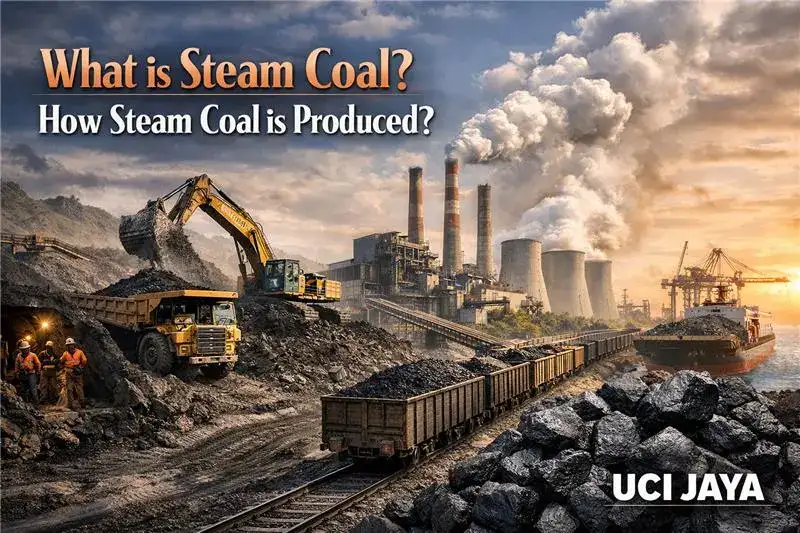
Steam coal is a special type of fossil fuel that people use to make electricity. Many people also call it thermal coal. This name comes from the way it works. When you burn this coal, it creates a lot of heat. This heat turns water into steam. The steam then spins big machines called turbines to create power for homes and factories. It is a very important part of the global energy market. Steam coal is different from other types of coal like coking coal because it has specific features. It burns steadily and provides a reliable source of energy.
The production of steam coal is a long and careful process. It starts deep inside the earth where carbon-rich layers have stayed for millions of years. To get this coal out, workers use big machines and smart planning. The production involves digging the coal, cleaning it, and breaking it into smaller pieces. This ensures the coal is ready for big industrial boilers. Each step in the production line helps to make the coal better for burning. Without this process, the coal would have too much dirt or moisture. High-quality steam coal helps power plants run smoothly without causing too many mechanical problems.
Physical Properties of Steam Coal
The physical properties of steam coal tell us how it looks and feels. First, the color is usually dull black or dark brown. It is not as shiny as some other types of coal. The texture is often hard, but it can crumble if you hit it with a heavy tool. One of the most important physical traits is the size of the coal pieces. In the industry, we call these "lumps" or "fines." The density of steam coal is also a key factor. It is heavy enough to sink in water but light enough to transport in large amounts by train or ship. Another property is its hardness. Harder coal is often better because it does not turn into dust too quickly during travel.
Chemical Properties of Steam Coal
The chemical properties of steam coal decide how much energy it can give. The most important part of its chemistry is carbon. High carbon levels mean the coal will burn for a long time. Steam coal also contains hydrogen, oxygen, and nitrogen. These elements are part of the organic matter from ancient plants. However, steam coal also has things we do not want, such as sulfur and ash. Sulfur is a chemical that can cause pollution when it burns. Ash is the leftover material that does not burn. Scientists measure the "Calorific Value" or CV of the coal. This value tells us exactly how much heat one kilogram of coal can produce. A high CV means the steam coal is very powerful and efficient for making steam.
How is Steam Coal Produced? A Step-by-Step Overview of the Industrial Extraction Process
The production of steam coal is not a simple task of just digging a hole. It is a massive industrial cycle that requires billions of dollars and many experts. In the global market, the demand for high-grade steam coal is always growing. This is because developing countries need more electricity every day. The extraction process is complicated because coal is hidden deep under layers of rock and soil.
To meet the high demand, mining companies must follow a very strict cycle. This cycle makes sure that the coal we get is pure and safe to use. If the extraction is not done correctly, the coal might have too many impurities. This would make it useless for high-tech power plants. The process involves many stages, from finding the coal to sending it to a B2B client. Each stage has its own set of rules and machinery. Understanding this extraction process helps us see why steam coal is such a valuable resource in the world trade system.
The Workflow: Logic from Surveying to Final Dispatch
The workflow of coal production follows a logical path. You cannot start digging until you know exactly where the coal is. That is why the first step is always mapping and surveying. Once the location is clear, the team creates a plan. This plan decides which machines to use and how to keep workers safe.
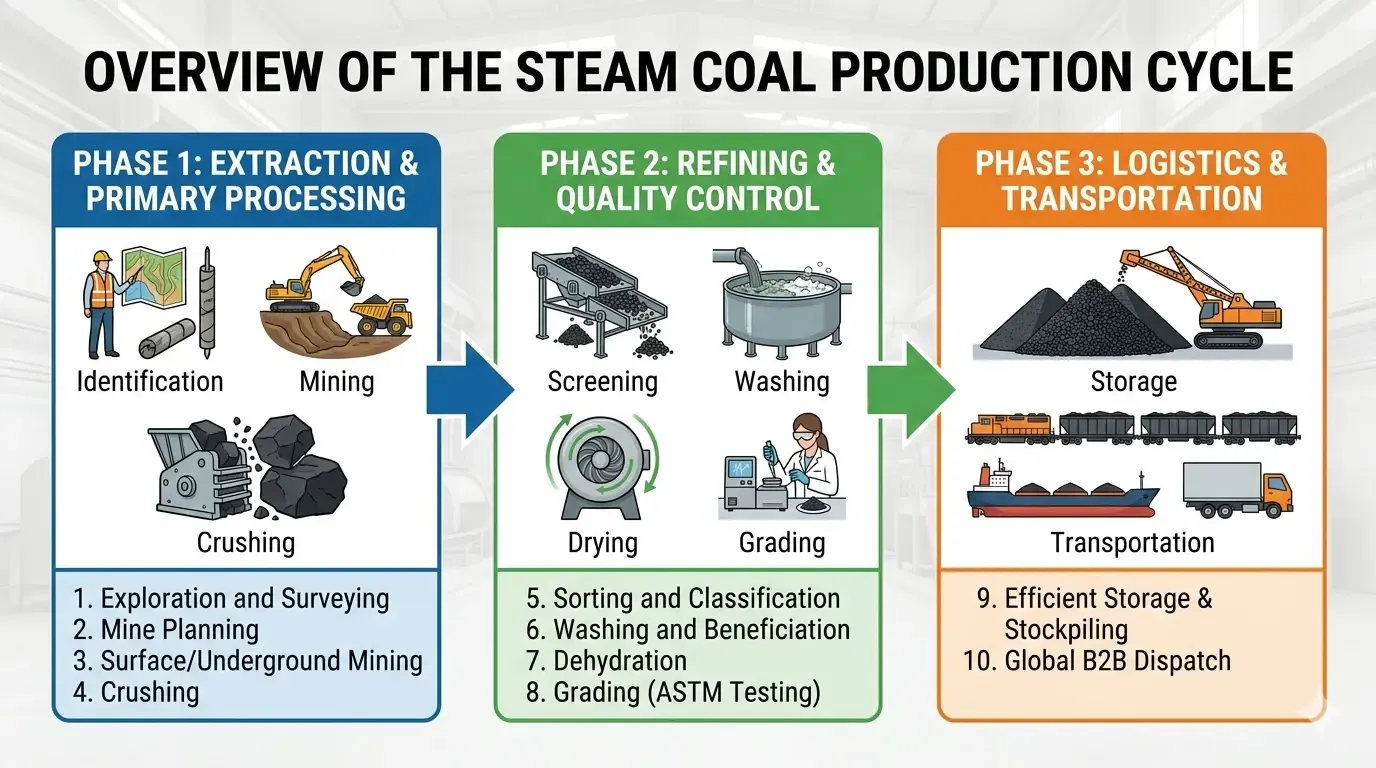
After the planning, the actual digging starts. This is the extraction phase. But the coal that comes out of the ground is often mixed with rocks and mud. So, the next logic in the workflow is cleaning and sizing. The coal must be the right size for the machines that will burn it. Finally, the coal goes through quality tests. Only the best coal moves to the storage area. From there, the dispatch team organizes the transport. This logical flow ensures that no time or money is wasted. It also guarantees that the buyer receives exactly what they ordered.
1. Exploration and Surveying (Identification)
The first step in making steam coal is finding it. This part of the process is called exploration. It is like a big treasure hunt. Geological experts use special tools to look deep into the earth. They want to find coal deposits that are big enough to mine. If the deposit is too small, it is not worth the money to start a mine.
During the surveying stage, experts take samples of the soil and rock. They use "core drilling" to pull out long tubes of earth. These tubes show the different layers of the ground. By looking at these layers, geologists can see the depth of the coal. They also evaluate the quality of the coal. They check if the coal has high carbon or too much sulfur. This evaluation is very important because it tells the company if the steam coal is high-grade or low-grade. If the quality is good, the project moves to the next step.
2. Strategic Mine Planning (Method Selection)
Once the coal is found, the company needs a strategic plan. You cannot just start a mine without a map. Engineers look at the environmental factors of the area. They check the weather, the water sources, and the plants and animals nearby. They also look at the "overburden." Overburden is the name for the rock and soil that sits on top of the coal.
The most important part of planning is choosing the mining method. There are two main choices: surface mining or underground mining. The choice depends on how deep the coal is. If the coal is near the surface, the plan will focus on big trucks and shovels. If the coal is very deep, the plan will include tunnels and elevators. Engineers also select the right machinery at this stage. They choose tools that can handle the specific type of rock in that area. A good plan makes the mine safe and helps the company save money.
3. Primary Extraction / Mining Techniques
This is the stage where the coal actually leaves the ground. It is the most active part of the production process. There are two main ways to do this.
3.1. Surface Mining (Open-pit / Opencast)
Surface mining happens when the steam coal is close to the top of the earth. This is often called open-pit or opencast mining. First, workers remove all the trees and plants. Then, they use explosives to break the top layers of rock. Big machines called "draglines" or "shovels" scoop up the soil. Once the coal layer is visible, they dig it out and put it into giant trucks. This method is very fast and can get a lot of coal at once. It is usually cheaper than underground mining because you do not have to build tunnels.
3.2. Underground Mining
When the steam coal is hundreds of meters deep, workers must go underground. This is a very technical process. There are two common ways to do this:
- Room and Pillar: In this method, miners cut "rooms" into the coal layer. They leave big blocks of coal standing like "pillars." These pillars hold up the roof of the mine so it does not fall down.
- Longwall Mining: This method uses a big cutting machine that moves along a long wall of coal. As the machine cuts the coal, the roof behind it is allowed to fall down in a controlled way.
Underground mining requires a lot of fresh air and light for the workers. It is more expensive, but it allows us to reach very high-quality steam coal that is deep in the earth.
4. Crushing and Sizing
When coal comes out of the mine, it is often in huge, irregular blocks. These blocks can be as big as a car. Industrial boilers in power plants cannot burn these big blocks. They need the coal to be a specific size. This is where crushing comes into the picture.
The coal goes into a machine called a "crusher." This machine has heavy metal parts that squeeze and break the coal. The goal is to make the coal pieces uniform. If the pieces are the same size, they will burn more evenly. Different customers want different sizes. Some want small grains, while others want medium-sized lumps. Crushing is the first step in making the raw coal look like a professional product.
5. Screening and Sorting (Classification)
After the coal is crushed, it needs to be sorted. This is called screening or classification. Imagine a giant sieve or kitchen strainer. The coal moves across big mechanical screens that vibrate very fast. These screens have holes of different sizes.
- Lumps: The biggest pieces stay on the top screen.
- Grains: The medium pieces fall to the next level.
- Fines: The tiny particles and dust fall all the way to the bottom.
Sorting is very important for the B2B market. A buyer might only want "lumps" for their specific machine. If the coal is mixed, the buyer's machine might break. Sorting ensures that every client gets the exact classification of steam coal they need for their business.
6. Washing and Beneficiation (Impurities Removal)
Raw steam coal is often dirty when it first comes out of the ground. It is mixed with rocks, clay, and sand. If a power plant burns this dirty coal, the rocks will not burn. This creates too much waste and can damage the expensive boilers. This is why washing and beneficiation are so important. Beneficiation is a fancy word for making the coal better by cleaning it.
The cleaning process usually happens at a "Coal Handling and Preparation Plant" or CHPP. Here, workers use water and special chemicals to wash the coal. The logic is simple: coal is lighter than rock. When you put the mixture into a big tank of liquid, the clean steam coal floats to the top. The heavy rocks and dirt sink to the bottom.
This process removes a lot of the ash and sulfur. Lowering the ash content makes the coal much more valuable. High-purity steam coal burns hotter and cleaner. For international B2B buyers, this cleaning step is a big selling point. It means they are paying for energy, not for useless rocks.
7. Drying and Dehydration (Moisture Control)
After the coal is washed, it is very wet. Water is a big enemy of steam coal. If the coal has too much moisture, it is hard to light. Also, the heat from the fire will be wasted just trying to dry the coal instead of making steam. This reduces the "net calorific value" of the fuel.
To fix this, the coal goes through a drying and dehydration phase. There are several ways to do this:
- Centrifuges: These are giant spinning machines. They spin the coal very fast so the water flies off, just like the spin cycle in a washing machine.
- Thermal Drying: Sometimes, big fans blow hot air over the coal to evaporate the water.
- Natural Air Drying: In some places, the coal is spread out in the sun to dry naturally.
Dehydration makes the coal lighter. This is great for shipping because you are not paying to transport heavy water. It also ensures that the coal does not freeze into a solid block during winter transport in cold countries.
8. Grading and Quality Control (Lab Testing)
Before any steam coal can leave the facility, it must pass a test. This is the quality control stage. In the global market, buyers use "ASTM Standards" or other international rules to check the coal. A lab team takes small samples from the coal piles and tests them.
The lab looks for three main things:
- Calorific Value (CV): They measure exactly how much heat the coal gives off. This is the most important number for a B2B client.
- Ash Content: They check how much leftover material will remain after burning.
- Sulfur Content: They check the sulfur levels to make sure the coal meets environmental laws. High sulfur can cause "acid rain," so many countries only buy low-sulfur steam coal.
The lab gives the coal a "grade." For example, some coal is graded as "High-Grade Thermal Coal" while others are "Sub-bituminous." This grading helps the sales team set the right price and find the right customer.
9. Efficient Storage and Stockpiling
Once the coal is clean, dry, and tested, it needs a place to stay. This is called stockpiling. You cannot just throw the coal in a messy pile. It must be organized. Large machines called "stackers" build long, neat rows of coal.
Efficient storage is important because coal can actually catch fire by itself if it gets too hot in the sun. This is called "spontaneous combustion." To prevent this, workers compact the coal piles to remove air gaps. They also monitor the temperature of the piles.
Stockpiling allows the mining company to keep a large supply ready. If a big ship arrives at the port, the company can quickly load it from the stockpile. It also helps separate different grades of coal. High-sulfur coal stays in one pile, and low-sulfur coal stays in another. This organization is key for a smooth supply chain.
10. Transportation and International Dispatch
The final step in the production cycle is moving the coal to the customer. Steam coal is a "bulk commodity," which means it is moved in huge amounts. This requires a very strong logistics network.
- Rail: Most coal moves from the mine to the port by long trains. These trains can have over 100 wagons full of coal.
- Ships: For international trade, huge "Bulk Carriers" are used. These ships can carry thousands of tons of steam coal across the ocean to countries like China, India, or Europe.
- Trucks: For local delivery to nearby factories, large trucks are used.
International dispatch involves a lot of paperwork. Customs agents check the quality reports and the weight of the coal. Once the ship is loaded and the documents are signed, the steam coal starts its journey to the B2B client. This completes the long journey from a deep underground layer to a power plant thousands of miles away.
Conclusion:
To wrap up this discussion, we can see that steam coal is a vital resource for the modern world. It is the fuel that keeps the lights on in many cities. The journey of this coal is very long and involves many smart people and big machines. It is not just about digging; it is about quality, safety, and science.
The process starts with exploration, where geologists find the best spots to mine. Then, the engineering team plans the mine to be safe and efficient. Whether it is surface mining or underground mining, the goal is to get the raw material out safely. After the coal is out, the industrial processing begins. Crushing and screening make sure the coal is the right size. Washing and drying make sure the coal is pure and ready to burn efficiently.
Quality control is perhaps the most important part of the whole cycle. By testing the calorific value and sulfur levels, companies ensure they are selling a high-quality product. Finally, the logistics team uses trains and ships to move the coal around the world. Every step in this 10-step process is connected. If one step fails, the quality of the steam coal goes down.
For businesses and power plants, understanding this process is very helpful. It shows why some coal is more expensive than others and why certain grades are better for specific boilers. Steam coal remains a pillar of global trade because it is a reliable and powerful way to create energy. Even as we look for new energy sources, the industrial extraction and production of thermal coal will continue to be a massive part of the world economy for many years.
Featured Articles
Industrial plants and large power stations need steady energy to run their mach
READ FULLMost people think that coal is just one single thing that we dig out of the gro
READ FULLBulk procurement is a very serious task for any business. When you decide to bu
READ FULL